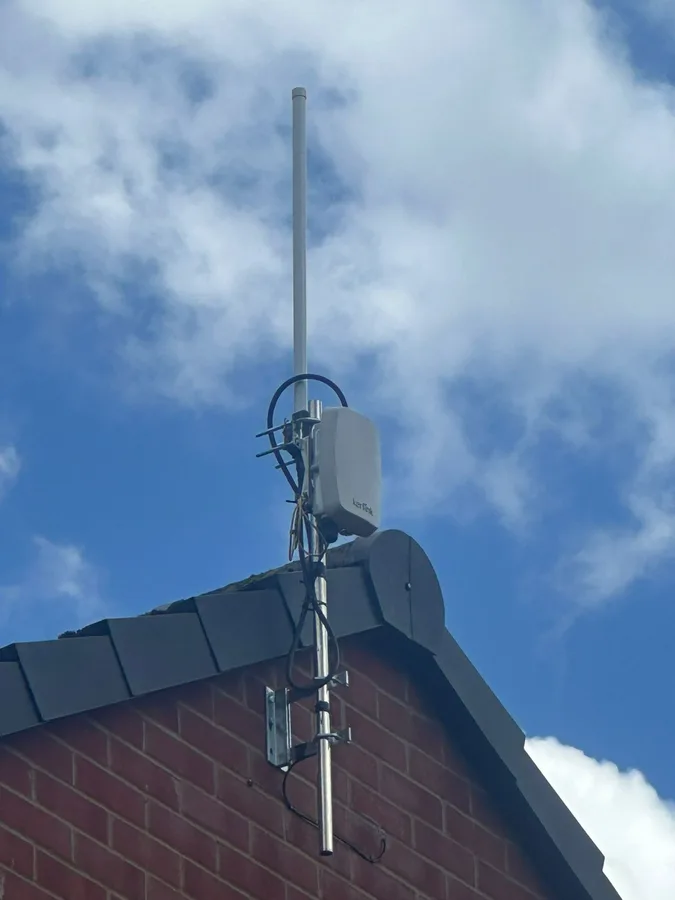
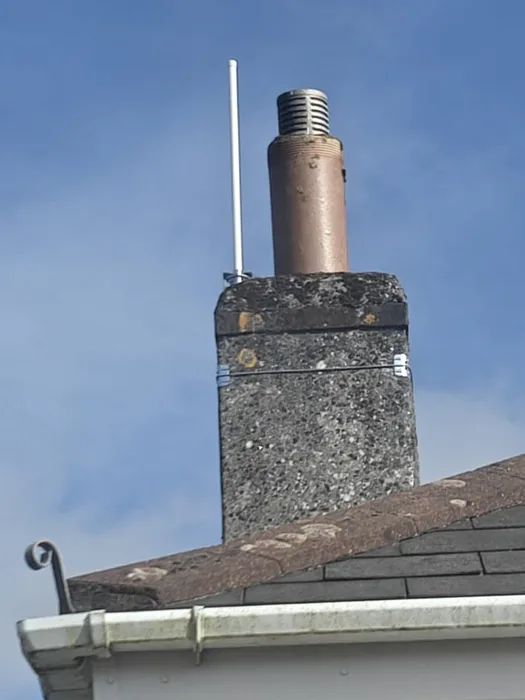
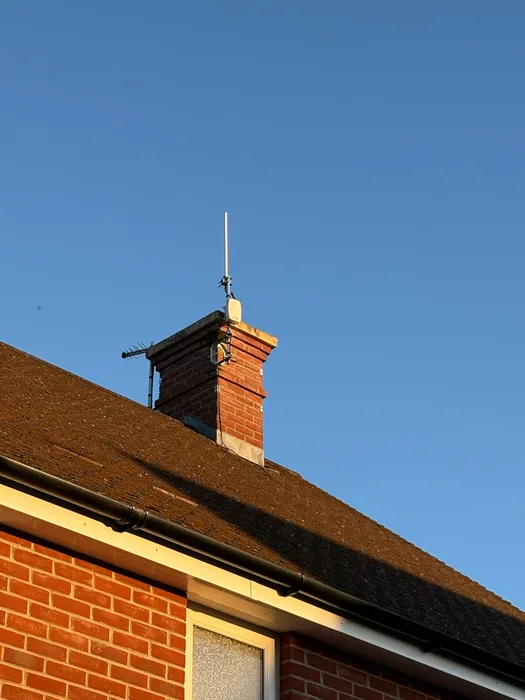
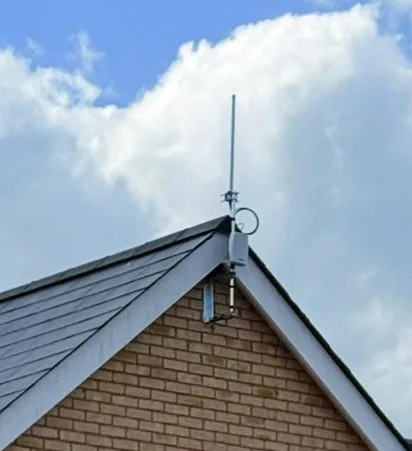
What does the aerial actually do? +
It receives short data transmissions from smart water meters in your neighbourhood - automatically, around the clock. That data goes straight to the water companies, meaning your neighbours get accurate bills based on real readings. No meter reader ever needs to visit, which also cuts thousands of unnecessary van journeys every week across the UK.
Is there any cost to me? +
Install, equipment, and ongoing maintenance are all free - we cover the lot. The only cost is the electric to run the aerial: it pulls about 7 watts continuously, which works out at roughly £20 a year at typical UK rates. So your net is around £330.
Is the aerial safe? +
Yes. It only emits low-power radio frequency to transmit data - non-ionising, the same kind as Wi-Fi, Bluetooth or a TV remote, and significantly less power than a standard mobile phone. The radio waves are far too weak to cause any adverse health effects. The device is certified and regulated by Ofcom, who mandate strict exposure limits to ensure it poses no health risk. Transmissions last just a few seconds, a handful of times a day, and the data is encrypted.
Will it affect my property's appearance? +
LoRaWAN aerials are compact and professionally fitted - similar in profile to a standard TV aerial. Our engineers take care to use appropriate fixings for your exterior.
What if I move, or sell the property? +
If you sell, the lease can either transfer to the new owner (who then receives the annual payment) or be ended as part of the sale - your choice. Nothing about the aerial holds up a sale.
Is this happening everywhere or just certain areas? +
Not everywhere at once. The network follows the water companies' smart-meter rollouts, which run region by region across England between 2025 and 2030 - so some areas are live now and others aren't yet. You don't need a smart water meter yourself; the aerial serves meters across the surrounding area. Put your address in and we'll come back to you as soon as we can on whether yours is somewhere we can place an aerial.
How do I know if my area's part of the rollout yet? +
Here's a strong clue: any sign your water company has been active on your street. Has your meter been swapped recently - often with a card through the door, and your reading starting again from zero? Or has someone from the water company been round asking where your meter is? Either way, that usually means smart meters are going into your area - and where smart meters go, an aerial is needed nearby to collect their readings. If that's happened near you, your area is likely live - which is exactly the moment to check your address, before a neighbour hosts the aerial first.
I rent my home - can I still do this? +
If you rent, the lease still has to be signed by whoever owns the property - so you'd need your landlord's OK. Worth knowing: the aerial runs off your electric supply (roughly £20 a year), so it's fair you take the larger share - you're the one covering the running cost. Something like £200 to you and £150 to the landlord is a reasonable deal to put to them. Simplest of all is if you own your home or business premises: you make the call and keep the lot.